





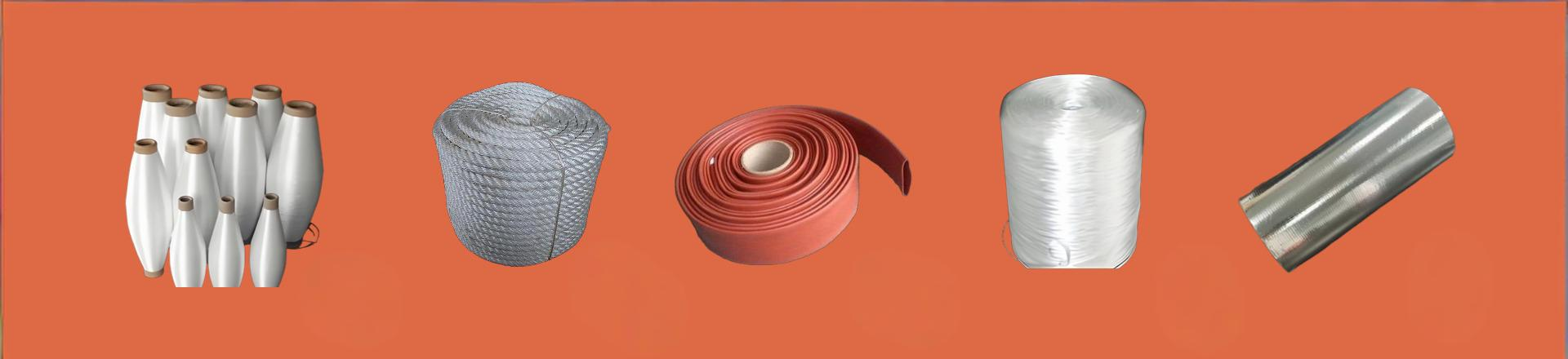
High silica fabric is a heat-resistant woven textile made primarily from silica-rich fibers. It is chosen when ordinary fiberglass fabric no longer provides enough protection from intense radiant heat, sparks, hot particles, or occasional molten-metal splash. In practical terms, it is a material for protecting equipment, work areas, and people near high-temperature processes, rather than a general-purpose cloth.
Its value comes from how it behaves under heat. A well-selected high silica fabric can help slow heat transfer, remain stable around hot work, and resist damage from welding sparks or brief exposure to severe industrial conditions. That does not mean every silica fabric is suitable for every hot environment. The form of heat, duration of exposure, mechanical wear, and installation method all affect whether it will perform as expected.
What makes high silica fabric different?
The term refers to fabric with a high silica content, typically produced by treating or processing glass-based textile material so that silica becomes the dominant component. The resulting fabric retains the woven flexibility of a textile while offering substantially stronger resistance to high heat than many conventional industrial fabrics.
It is often confused with standard fiberglass cloth because both materials may look similar: woven, light-colored, and available in rolls, blankets, tapes, or custom-cut shapes. The difference becomes important around more severe heat sources. Standard fiberglass fabric can be useful for moderate-temperature insulation and general welding protection, but it may lose strength, soften, or degrade sooner in demanding applications. High silica fabric is intended for harsher exposure where thermal stability matters more.
It is also different from ceramic fiber textiles. Ceramic fiber products are commonly selected for very high-temperature insulation, furnace linings, and situations where low heat transfer is the main goal. High silica cloth often offers a useful balance of heat resistance, flexibility, handling strength, and compatibility with fabricated protective products such as curtains, covers, and removable insulation jackets.
Heat resistance is only one part of the decision
When people hear “extreme heat protection,” they may assume the highest heat-resistance rating is the only factor that matters. In real use, the heat source must be identified first.
Radiant heat comes from a nearby hot surface, flame, or molten material and travels through the air. A furnace opening, a hot exhaust system, or a metal casting operation can create this type of exposure. The fabric may not touch the heat source, but it can still absorb energy rapidly. In these cases, fabric weight, thickness, spacing from the hot surface, and whether a reflective coating is used can matter as much as the fiber itself.
Convective heat is carried by hot air or gas. A fabric barrier exposed to hot airflow needs to remain stable while limiting heat passing through it. Open gaps, poor sealing around edges, and loose installation can undermine an otherwise suitable material.
Direct contact heat is more severe because the textile touches a hot component. This is common in removable insulation pads, pipe wraps, flange covers, and equipment shields. The fabric may need an insulating inner layer or a multi-layer construction; a single woven outer layer is not automatically enough.
Molten-metal splash creates a different challenge. The material needs to resist the initial impact, avoid opening at seams, and prevent hot particles from working through the weave. A fabric that performs well against sparks may not be adequate for repeated or heavy splash. Where splash protection is the priority, coated constructions, heavier fabrics, reinforced edges, and carefully designed overlap areas are often more relevant than a simple roll material.
Where high silica fabric is used
High silica fabric appears in industries where hot work is frequent, where equipment must stay accessible, or where rigid insulation is impractical. Its flexibility lets it be draped, sewn, wrapped, layered, or made into tailored protective components.
Welding blankets and welding curtains
One of the most familiar uses is welding protection. Fabric blankets protect floors, nearby machinery, hoses, cables, and finished surfaces from sparks and grinding debris. Curtains help separate hot-work areas from adjacent operations. The important distinction is that a spark shield is not necessarily a flame barrier, a smoke barrier, or a safe screen for sustained molten-metal exposure. The expected welding process, spark intensity, distance from the work, and how long the barrier remains in place should guide material selection.
Foundries, metal processing, and casting areas
Foundry environments may combine radiant heat, hot dust, metal splash, and mechanical abrasion. High silica textiles can be used for protective drapes, ladle-area shields, removable equipment covers, and insulation assemblies around hot components. In these conditions, the weak points are often not the fabric face but the seams, grommets, hanging hardware, and edges. A good fabric can fail early if its finished construction is not built for the same exposure.
Removable insulation covers
Valves, flanges, pumps, turbines, exhaust components, and pipe sections sometimes need insulation that can be removed for inspection or maintenance. A removable cover commonly uses high silica fabric as an outer shell because it can tolerate elevated surface temperatures and resist external damage. Insulation layers inside the cover reduce heat loss and lower the outside surface temperature. The outer textile alone should not be treated as the complete thermal solution.
For removable covers, the shape matters. Tight corners, unprotected fastening points, and unsealed openings allow heat to escape and can shorten service life. The fabric needs to be matched with suitable thread, closures, insulation fill, and attachment methods.
Fire curtains and industrial barriers
High silica fabric can be incorporated into fire curtains, furnace curtains, and heat-containment barriers. These installations may protect an opening, reduce radiant heat reaching nearby equipment, or create a temporary separation around a hot process. The fabric must be evaluated as part of the whole system. Mounting design, overlap, movement frequency, and the presence of flame or smoke all influence the appropriate construction.
A curtain that is regularly folded, pulled, or exposed to sharp metal edges needs more abrasion resistance than a fixed barrier. A fabric that performs well in a stationary furnace curtain may wear too quickly in a busy production area if it is repeatedly dragged or caught on equipment.
Aerospace, marine, energy, and industrial equipment
In aerospace, marine, oil and gas, wind energy, and power-related equipment, high-temperature textiles are used in insulation systems, exhaust protection, heat shields, flexible connectors, and protective wraps. These applications often involve limited space and complicated equipment geometry. Flexible silica-based fabric is useful because it can cover irregular shapes that are difficult to insulate with rigid boards or metal shielding alone.
However, vibration, moisture, oil, salt exposure, and repeated maintenance can be as important as temperature. A heat-resistant textile may require a coating or an outer protective layer when chemicals, weather, or abrasion are part of the service environment.
Fabric alone is rarely the complete protection system
High silica fabric is supplied in different weights, weave styles, finishes, and coatings. These details are not cosmetic. They determine how the material handles, how tightly it blocks particles, how it performs against abrasion, and whether it can be fabricated into a durable finished product.
For this reason, a request for “high silica fabric” should not stop at a fabric name. The intended finished product should be considered from the start. A welding blanket, a removable valve jacket, and a hanging heat curtain may all use silica-rich textile, but they need different weight, finishing, stitching, and edge treatment.
MESSAGE
Interested? Leave your contact details.
Got any questions?
If you have something on your mind, just let us know!
We are more than happy to answer all your inquiries.